01
Begin from almost nothing
Three oak saplings, one lava bucket, two water buckets, four bread, one sugar cane. That is the whole supply — and it is deliberately one tree short of comfortable, because a sapling sometimes refuses to grow.
Whitelisted alpha · Java & Bedrock
ZGMC is a Minecraft survival hub that starts you with almost nothing — a 3×3 pad, three saplings, a bucket of lava, two of water. Grow a tree, make stone, earn the ground under your feet. The gateways bring you back to it.

Zero Gravity Minecraft · whitelisted alpha
Java
—
Paper 26.3
Bedrock
—
via Geyser
Online now
—
of 16
World
The void, one shared map
16 pads · 4 gateways · 12 deposits · 1 dragon
Live status is read from the server by your browser.
01 The idea
Every survival server hands you a spawn and a map. ZGMC hands you a square of dirt in the middle of nothing and a kit that is exactly enough to make more: saplings for wood, lava and water for cobblestone, bread for the first night. No tools. The first axe is something you earn.
01
Three oak saplings, one lava bucket, two water buckets, four bread, one sugar cane. That is the whole supply — and it is deliberately one tree short of comfortable, because a sapling sometimes refuses to grow.
02
Land on a pad and it becomes yours — permanently. Four gateways, four pads each, sixteen homes at the edge of a 2048-block border. Whichever gate you walk through, you go back to your own.
03
Wood becomes stone, stone becomes gear, gear becomes a nether trip. Four crate tiers sit between you and the end fight, and the last key is paid for by a dragon kill — or by two gold keys at the Exchanger, for anyone who would rather grind the ladder than the arena. The arena exists and the dragon flies above it; the fight itself is what the alpha has not built yet.
02 The world
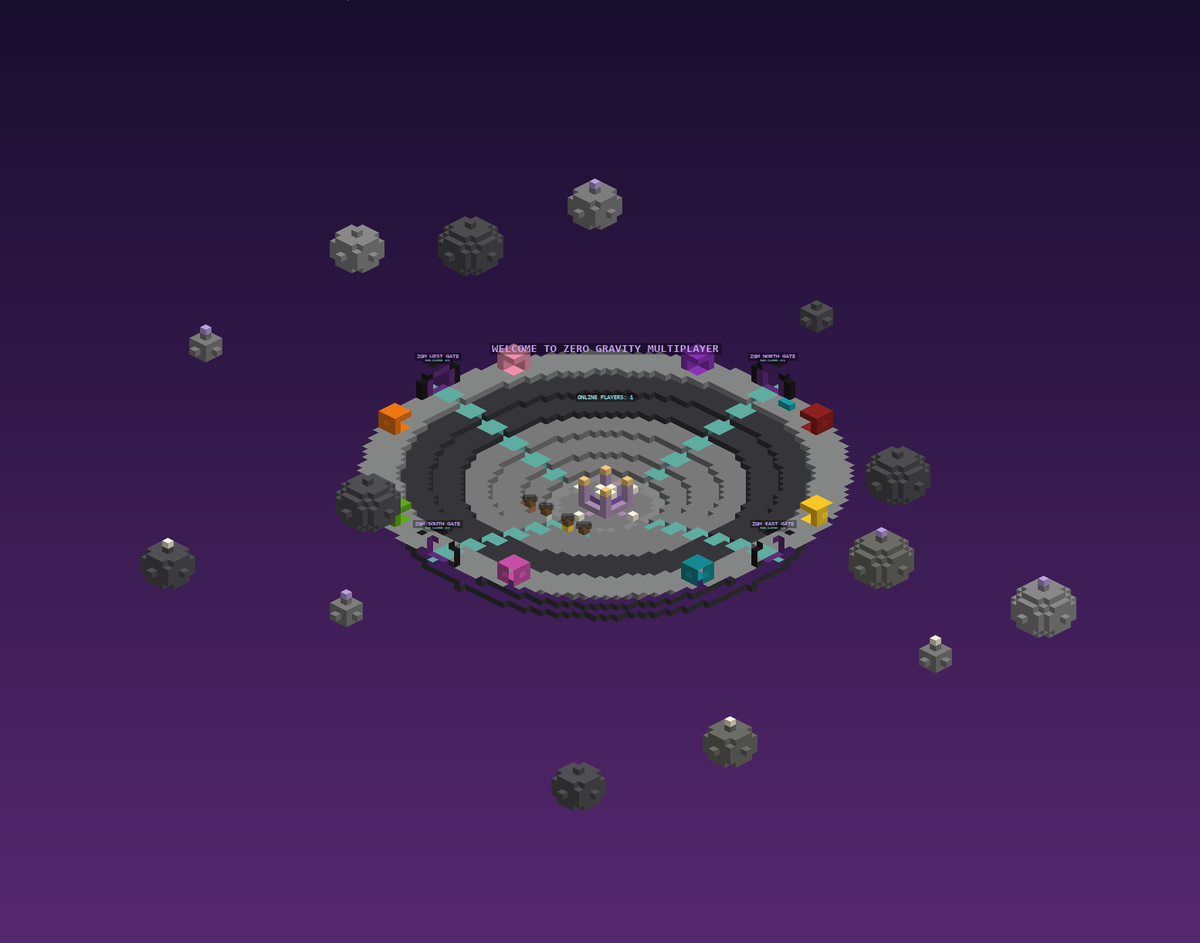
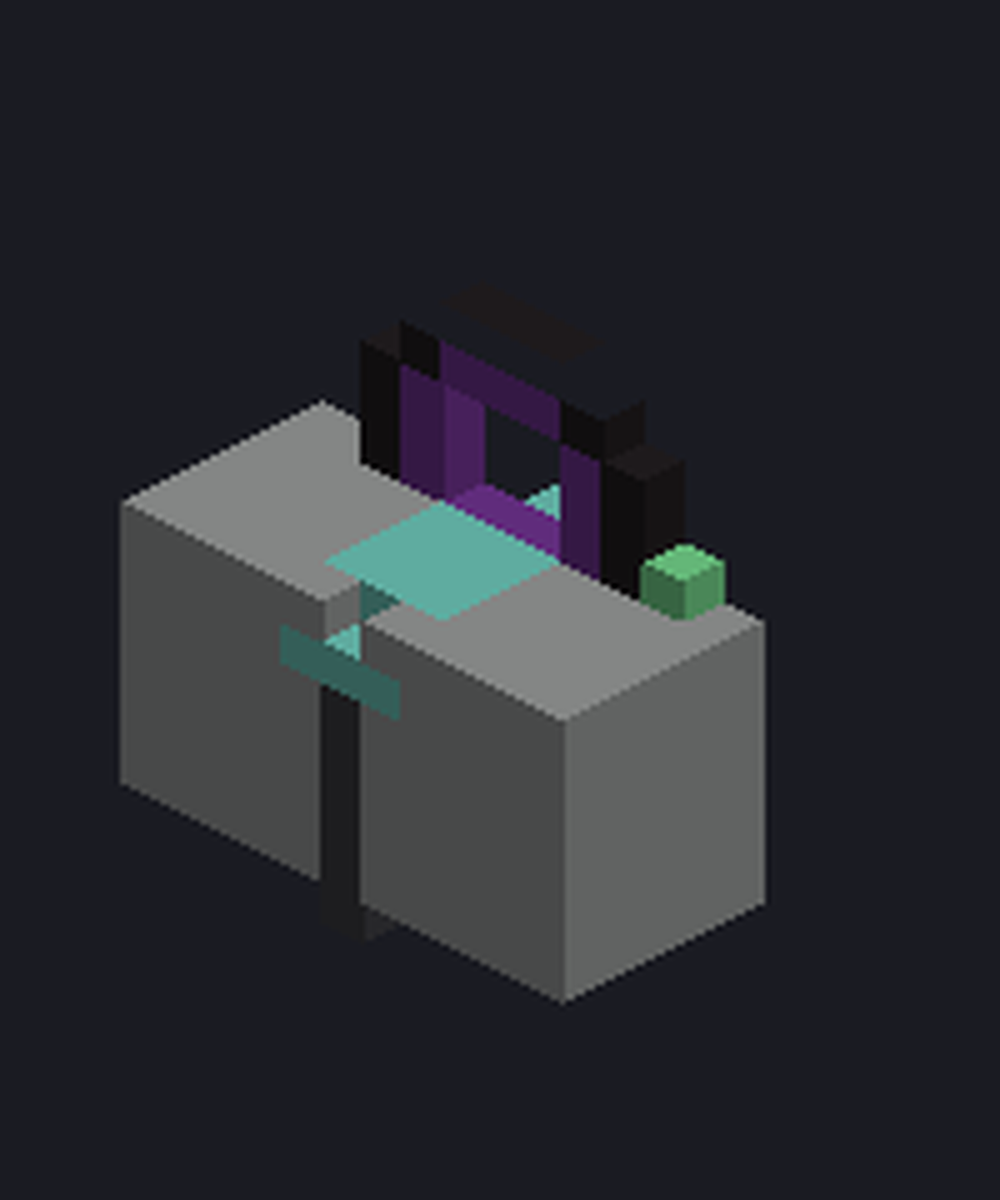
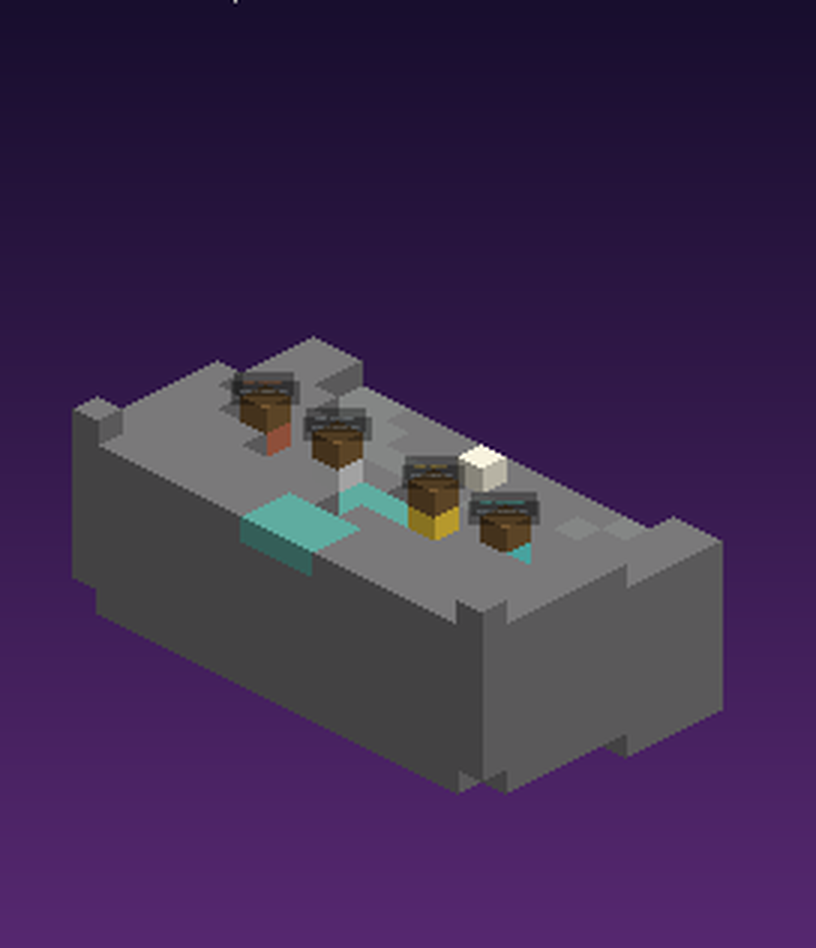
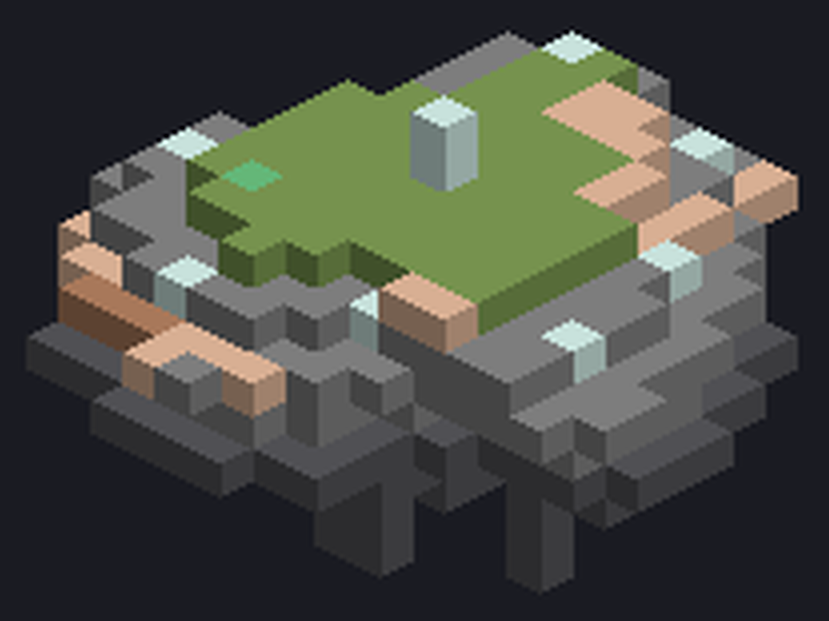
The lobby holds the gates, the crate row and the dragon's arena — all of it built to survive players touching it. Beyond the gates, sixteen pads sit on a lattice in the void, spaced so nobody starts within sight of anybody else, and twelve islands of ore hang just off the beaten path. These pictures are rendered offline from the world's own region files: blocks and light, no client, no shaders.
Ore
The void's rock had no coal, iron, gold or diamond in it — and the crate ladder charges four diamond ore for a silver key. So the ore had to come from somewhere. Twelve deposit islands now hang 96 to 180 blocks off a pad: two ores each, all eight overworld ores across the twelve, 370 ore blocks in total.
The world guide has the timers, the guards and the repair signal →
03 The ladder
Crates are not a lottery dressed as progress. Each tier's payout is exact arithmetic over the shipped tables, and each tier is worth at least half again the one below it — so the ladder is a property of the file, not of a lucky run.
Copper
Your first pad, and every advancement
8.0 points per opening
Bread, torches, arrows, iron, a golden apple
Silver
Four diamond ore — or 3 copper keys
22.0 points per opening
Iron and gold, potions, sharpness books, a diamond or two
Gold
One ancient debris — or 3 silver keys
57.9 points per opening
Diamonds, netherite scrap, a totem, protection books
Diamond
One dragon kill — or 2 gold keys
104.1 points per opening
Netherite ingots, totems, enchanted golden apples, shulker shells
Worth is measured in the project's own scoring units across the shipped loot tables. Keys are paid from vanilla statistics — ore mined, debris broken, dragons killed — so the world, not a menu, decides what you have earned. The dated standings board is here →
04 Join
The alpha is whitelisted and small on purpose: sixteen slots, sixteen homes, one shared world. Applications are read by a person in the Discord — say which edition you play and the name you want on the list.
Java players connect as play.zgmc.online. Bedrock players arrive as
.Name, and the first attempt is usually refused while the whitelist learns the
account — that failed join is how the server gets your ID.
Invites are open. Read the pinned post before you apply — it says what the alpha is and what it is not. Once you are in, the world guide has the mechanics — the kit, the gates, the ore and the keys — and the player guide covers the part that involves everybody else.
Java Edition
No port needed — Java reads it from the name.
Bedrock Edition
Two fields on a phone or console: host
play.zgmc.online, port 19132.
[Not Secure]Whitelist is on. Apply in the Discord and your name goes on the list.
05 Questions
The alpha world is disposable — it exists to find out whether the loop is fun. Growing from 16 pads to 32 is a wipe and a regenerate, announced in advance, because your home is a site number and renumbering would strand people. Nothing in the alpha is promised to survive into beta.
You keep your pad, always. The gateways are return trips, not a fresh start, and the kit is
given once per player. Your inventory survives as well: keepInventory is on in
the void, so a death costs you the walk back from the lobby, not your buckets. Losing
something takes work — drop it into the void, or leave it in a chest you forget. And if you
only want the lobby, type /lobby; you do not have to die to get there.
No. There is no economy, no cosmetics, and nothing is bought or sold between players. The one trade on the server is the Exchanger, where keys walk up the crate ladder. Crates are paid for with things you do in the world, not with money, and the only currency the server keeps is what you have already earned.
From the deposit islands: twelve of them, three per quadrant, 96 to 180 blocks off a pad. Each carries two ores and refills on a timer set by its rarest one — five minutes for coal, iron and copper, thirty for diamond. A refill only happens while a player is within 96 blocks, so an island you walk away from may wait for your next visit. The world guide has the full table.
Apply in the ZGMC Discord: your Java name, or your gamertag if you play Bedrock. Every application is read by a person, usually the same day. Being in the Discord is the entry point, not a formality — the invite link is the front door.
On Java, no: play.zgmc.online is a name and the client finds the port from it.
Bedrock has no name lookup, so it wants the host and the port as two fields —
play.zgmc.online and 19132.
Yes — Bedrock clients share the world through Geyser. Expect the floating signs to read a little smaller than they do on Java, and expect your first join to fail while the whitelist is updated. Try twice.
Paper 26.3, Multiverse-Core for the worlds, Geyser and Floodgate for Bedrock, and a set of datapacks that do the gates, pads, crates, and the dragon guard. The gameplay is data rather than a plugin, which is why the world can be moved, copied, and checked.